Noon Sakinah Rules in Tajweed: A Simple Guide for Kids and Beginners
September 16, 2026
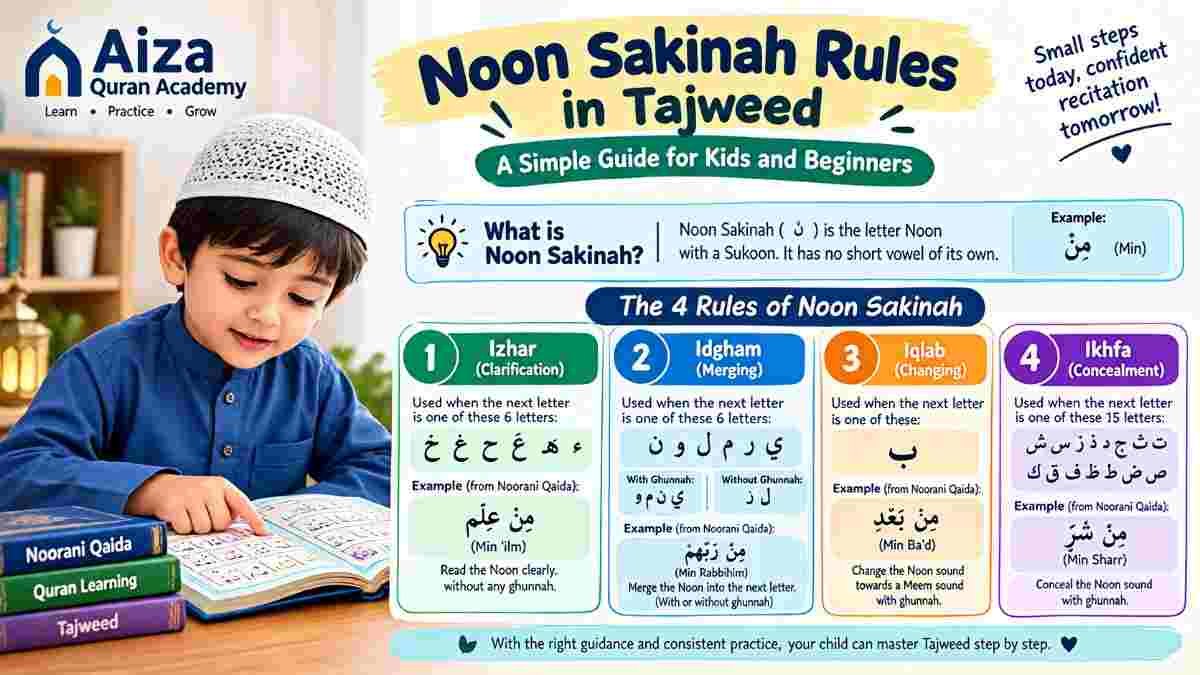
Learning Quran with correct pronunciation is important for every beginner. One of the first Tajweed topics children usually encounter is Noon Sakinah and Tanween. If your child is learning Quran, you may have questions such as: What is Noon Sakinah? What are the four Noon Sakinah rules? How can I teach Noon Sakinah to my child? Why does the sound of Noon sometimes change while reading the Quran? Does my child need to learn Tajweed before reading the Quran? The good news is that these rules become much easier when children learn to look at the letter that comes after Noon Sakinah or Tanween.
What Is Noon Sakinah?
Noon Sakinah (نْ) is the Arabic letter Noon with a Sukoon. It has no short vowel of its own. For example: مِنْ The Noon has a Sukoon, so it is called Noon Sakinah. Tanween refers to the double vowel signs: ـً ـٍ ـٌ Although Tanween is written differently, it produces an n sound when the word is continued. That is why Noon Sakinah and Tanween are taught together in Tajweed.
What Are the Four Rules of Noon Sakinah?
There are four main rules: 1. 𝑰𝒛𝒉𝒂𝒓 (إظهار) — clear pronunciation 2. 𝑰𝒅𝒈𝒉𝒂𝒎 (إدغام) — merging 3. 𝑰𝒒𝒍𝒂𝒃 (إقلاب) — changing the Noon sound toward a Meem sound 4. 𝑰𝒌𝒉𝒇𝒂 (إخفاء) — concealing the Noon sound with Ghunnah Which rule applies depends on the next letter after Noon Sakinah or Tanween. 𝑸𝒖𝒊𝒄𝒌 𝑮𝒖𝒊𝒅𝒆 𝒇𝒐𝒓 𝑷𝒂𝒓𝒆𝒏𝒕𝒔 Rule Letters Simple explanation Izhar ء ه ع ح غ خ Read the Noon clearly Idgham ي ر م ل و ن Merge the Noon into the following letter Iqlab ب Change the Noon sound toward a hidden Meem sound Ikhfa 15 remaining letters Hide the Noon sound with Ghunnah For Idgham, ي ن م و are read with Ghunnah, while ل ر are read without Ghunnah.
1. Izhar — Read the Noon Clearly
Izhar means to make the Noon sound clear. It applies when Noon Sakinah or Tanween is followed by one of these six letters: ء ه ع ح غ خ These are commonly called the throat letters. For children, a simple way to remember Izhar is: “See one of the six throat letters → make the Noon clear.” There is no extended Ghunnah in Izhar.
2. Idgham — Merge the Sounds
𝑰𝒅𝒈𝒉𝒂𝒎 means merging. It occurs when Noon Sakinah or Tanween is followed by one of these six letters: ي ر م ل و ن A useful memory group is: يرملون Idgham has two forms: With Ghunnah: ي ن م و Without Ghunnah: ل ر The Noon sound is not pronounced separately; instead, it merges into the following letter. For a child, you can explain it simply: “𝑫𝒐𝒏'𝒕 𝒔𝒆𝒑𝒂𝒓𝒂𝒕𝒆 𝒕𝒉𝒆 𝑵𝒐𝒐𝒏. 𝑱𝒐𝒊𝒏 𝒊𝒕𝒔 𝒔𝒐𝒖𝒏𝒅 𝒘𝒊𝒕𝒉 𝒕𝒉𝒆 𝒏𝒆𝒙𝒕 𝒍𝒆𝒕𝒕𝒆𝒓.”
3. Iqlab — The Noon Sound Changes
Iqlab is especially easy for children to recognize because it has only one trigger letter: ب (Baa). When Noon Sakinah or Tanween comes before ب, the Noon sound changes toward a concealed Meem sound and is accompanied by Ghunnah. A simple memory tip: “Noon + Baa = Iqlab.” Parents can help children practice by first finding the Noon or Tanween and then checking whether the next letter is ب.
4. Ikhfa — Hide the Noon Sound
Ikhfa means concealment. When Noon Sakinah or Tanween is followed by one of the 15 Ikhfa letters, the Noon sound is concealed rather than pronounced completely clearly or completely merged. The 15 letters are: ت ث ج د ذ ز س ش ص ض ط ظ ف ق ك Ikhfa is accompanied by Ghunnah. For children, the easiest description is: “𝙏𝙝𝙚 𝙉𝙤𝙤𝙣 𝙞𝙨 𝙣𝙤𝙩 𝙘𝙤𝙢𝙥𝙡𝙚𝙩𝙚𝙡𝙮 𝙘𝙡𝙚𝙖𝙧 𝙖𝙣𝙙 𝙣𝙤𝙩 𝙘𝙤𝙢𝙥𝙡𝙚𝙩𝙚𝙡𝙮 𝙢𝙚𝙧𝙜𝙚𝙙—𝙞𝙩 𝙞𝙨 𝙝𝙞𝙙𝙙𝙚𝙣 𝙬𝙞𝙩𝙝 𝙖 𝙣𝙖𝙨𝙖𝙡 𝙨𝙤𝙪𝙣𝙙.”
How Can Parents Help a Child Learn Noon Sakinah?
Parents don't need to teach a child all the rules at once. Try this simple method: Step 1: Find نْ or Tanween. Step 2: Look at the letter immediately after it. Step 3: Ask the child which group that letter belongs to. Step 4: Name the rule. Step 5: Let the child recite the example slowly. This “look at the next letter” approach can make the rules easier to recognize instead of asking children to memorize long definitions.
What Are Common Mistakes Children Make?
Children learning Tajweed may find it difficult to remember which letters belong to each rule. Common learning difficulties include: Pronouncing Izhar with unnecessary nasalization Forgetting which letters belong to Idgham Confusing Iqlab with Ikhfa Making the Ghunnah too short or too long Trying to memorize the rules without practicing them in actual Quranic words Looking at the Noon but forgetting to check the next letter Regular short practice and correction from a qualified Quran teacher can help children develop accurate recitation habits.
How Long Does It Take to Learn Noon Sakinah Rules?
There is no single time that works for every child. A child who already knows Arabic letters and basic Quran reading may understand the four rules relatively quickly. A beginner may need more practice with Arabic letters, Sukoon, Tanween, and pronunciation first. The important thing is not to rush. Children should understand the pattern and practice it in actual Quran reading.
Frequently Asked Questions About Noon Sakinah
𝑾𝒉𝒂𝒕 𝒂𝒓𝒆 𝒕𝒉𝒆 𝒇𝒐𝒖𝒓 𝑵𝒐𝒐𝒏 𝑺𝒂𝒌𝒊𝒏𝒂𝒉 𝒓𝒖𝒍𝒆𝒔? The four main rules are Izhar, Idgham, Iqlab, and Ikhfa. 𝑯𝒐𝒘 𝒎𝒂𝒏𝒚 𝒍𝒆𝒕𝒕𝒆𝒓𝒔 𝒂𝒓𝒆 𝒕𝒉𝒆𝒓𝒆 𝒇𝒐𝒓 𝑰𝒛𝒉𝒂𝒓? There are six Izhar letters: ء ه ع ح غ خ. 𝑯𝒐𝒘 𝒎𝒂𝒏𝒚 𝑰𝒅𝒈𝒉𝒂𝒎 𝒍𝒆𝒕𝒕𝒆𝒓𝒔 𝒂𝒓𝒆 𝒕𝒉𝒆𝒓𝒆? There are six Idgham letters: ي ر م ل و ن. 𝑾𝒉𝒊𝒄𝒉 𝒍𝒆𝒕𝒕𝒆𝒓 𝒄𝒂𝒖𝒔𝒆𝒔 𝑰𝒒𝒍𝒂𝒃? ب (Baa) is the single letter that causes Iqlab. 𝑯𝒐𝒘 𝒎𝒂𝒏𝒚 𝑰𝒌𝒉𝒇𝒂 𝒍𝒆𝒕𝒕𝒆𝒓𝒔 𝒂𝒓𝒆 𝒕𝒉𝒆𝒓𝒆? There are 15 Ikhfa letters. 𝑰𝒔 𝑻𝒂𝒏𝒘𝒆𝒆𝒏 𝒊𝒏𝒄𝒍𝒖𝒅𝒆𝒅 𝒊𝒏 𝑵𝒐𝒐𝒏 𝑺𝒂𝒌𝒊𝒏𝒂𝒉 𝒓𝒖𝒍𝒆𝒔? Yes. Noon Sakinah and Tanween follow the same four main rules based on the letter that comes after them. 𝑪𝒂𝒏 𝒄𝒉𝒊𝒍𝒅𝒓𝒆𝒏 𝒍𝒆𝒂𝒓𝒏 𝑵𝒐𝒐𝒏 𝑺𝒂𝒌𝒊𝒏𝒂𝒉 𝒐𝒏𝒍𝒊𝒏𝒆? Yes. Children can learn Tajweed online through structured lessons and guided practice. A teacher can listen to the child's recitation and correct pronunciation, Ghunnah, and application of the rules. 𝑺𝒉𝒐𝒖𝒍𝒅 𝒎𝒚 𝒄𝒉𝒊𝒍𝒅 𝒍𝒆𝒂𝒓𝒏 𝑵𝒐𝒐𝒏 𝑺𝒂𝒌𝒊𝒏𝒂𝒉 𝒃𝒆𝒇𝒐𝒓𝒆 𝒓𝒆𝒂𝒅𝒊𝒏𝒈 𝒕𝒉𝒆 𝑸𝒖𝒓𝒂𝒏? Children can begin learning Tajweed progressively as they develop their Quran reading skills. The right starting point depends on the child's current level. A Simple Way to Remember the Rules When your child sees Noon Sakinah or Tanween, teach them to ask one question: “What letter comes next?” Then remember: Six throat letters → Izhar ي ر م ل و ن → Idgham ب → Iqlab The remaining 15 letters → Ikhfa With regular practice, this process becomes much easier and more natural during Quran recitation.
Conclusion
𝑯𝒆𝒍𝒑𝒊𝒏𝒈 𝒀𝒐𝒖𝒓 𝑪𝒉𝒊𝒍𝒅 𝑳𝒆𝒂𝒓𝒏 𝑸𝒖𝒓𝒂𝒏 𝒘𝒊𝒕𝒉 𝑻𝒂𝒋𝒘𝒆𝒆𝒅 Tajweed is not something children need to master in one day. It is a skill that develops through clear explanation, regular practice, listening, and correction. At Aiza Quran Academy, children can learn Quran reading and Tajweed through structured online lessons with individual attention. Parents can choose a learning routine that suits their child's age and level. If your child is just starting Tajweed, beginning with simple rules such as Noon Sakinah and Tanween can give them a strong foundation for more advanced Quran recitation.